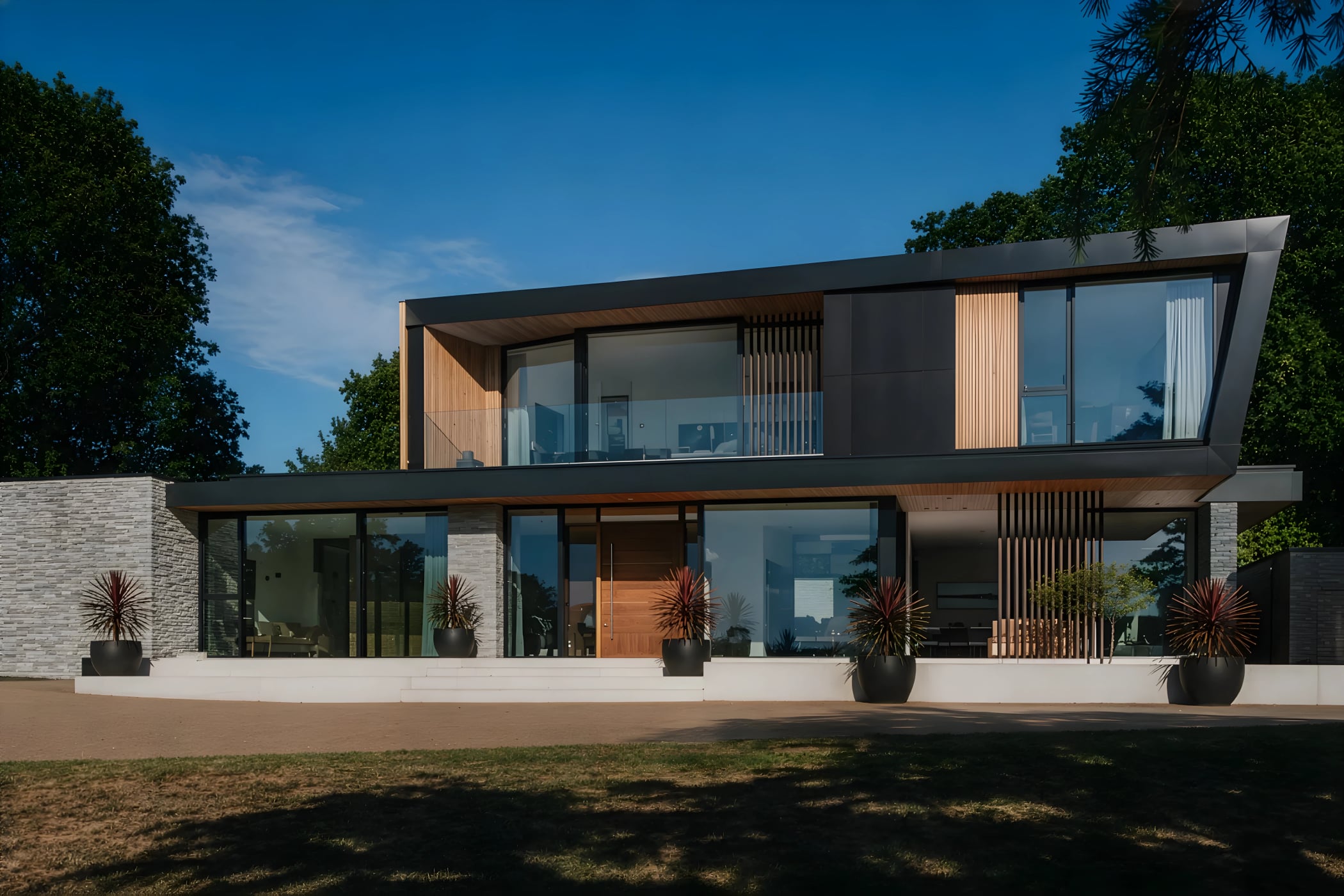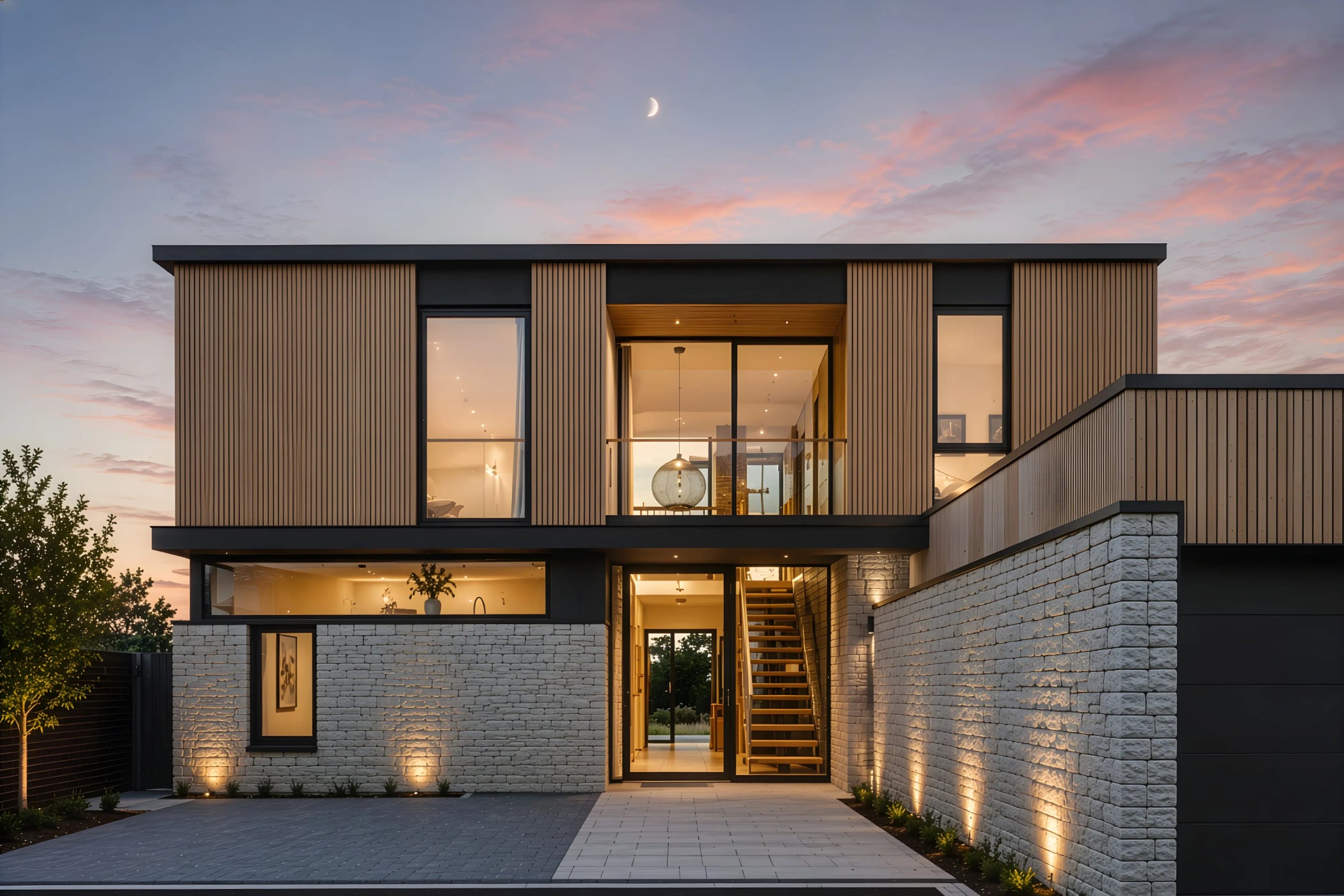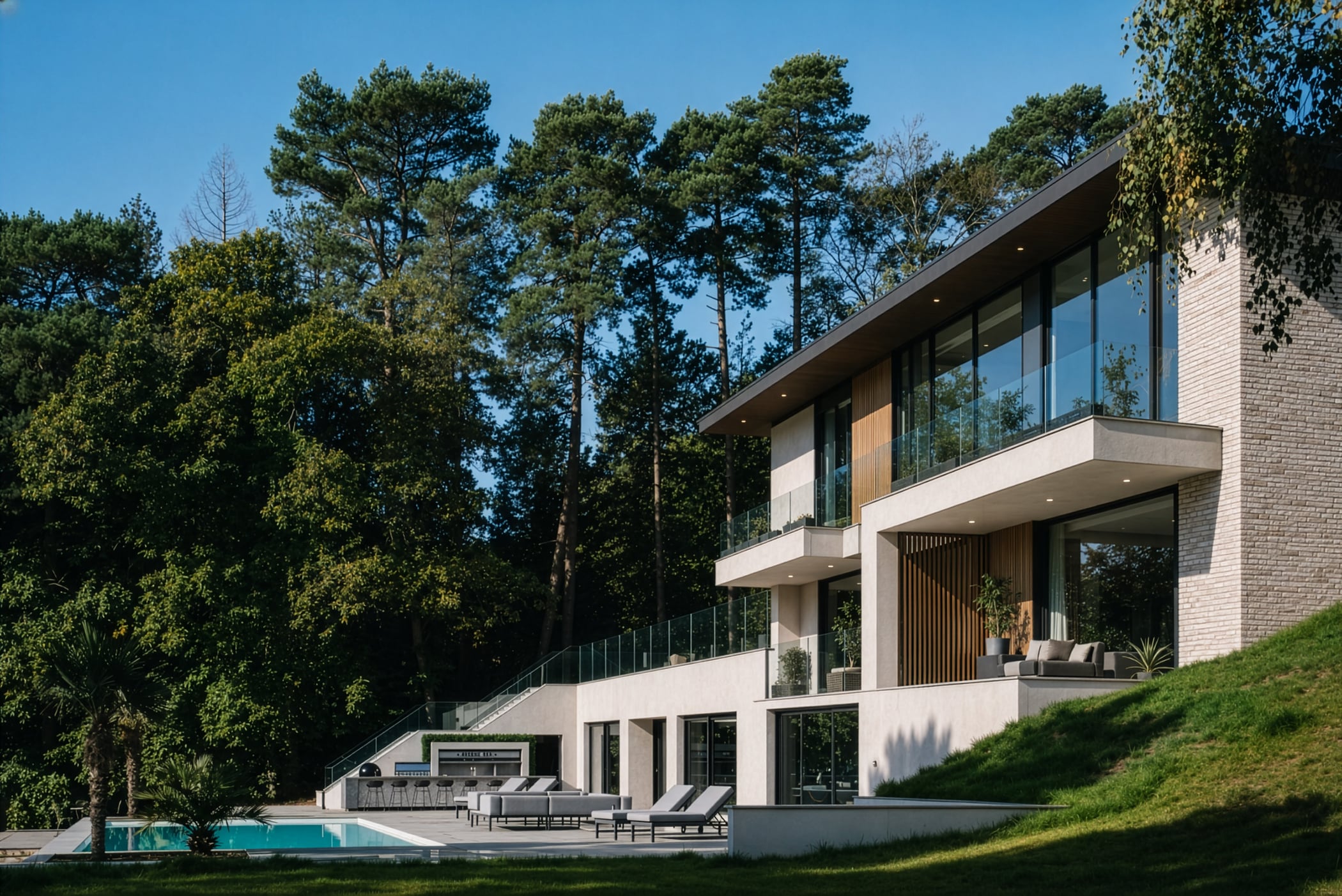
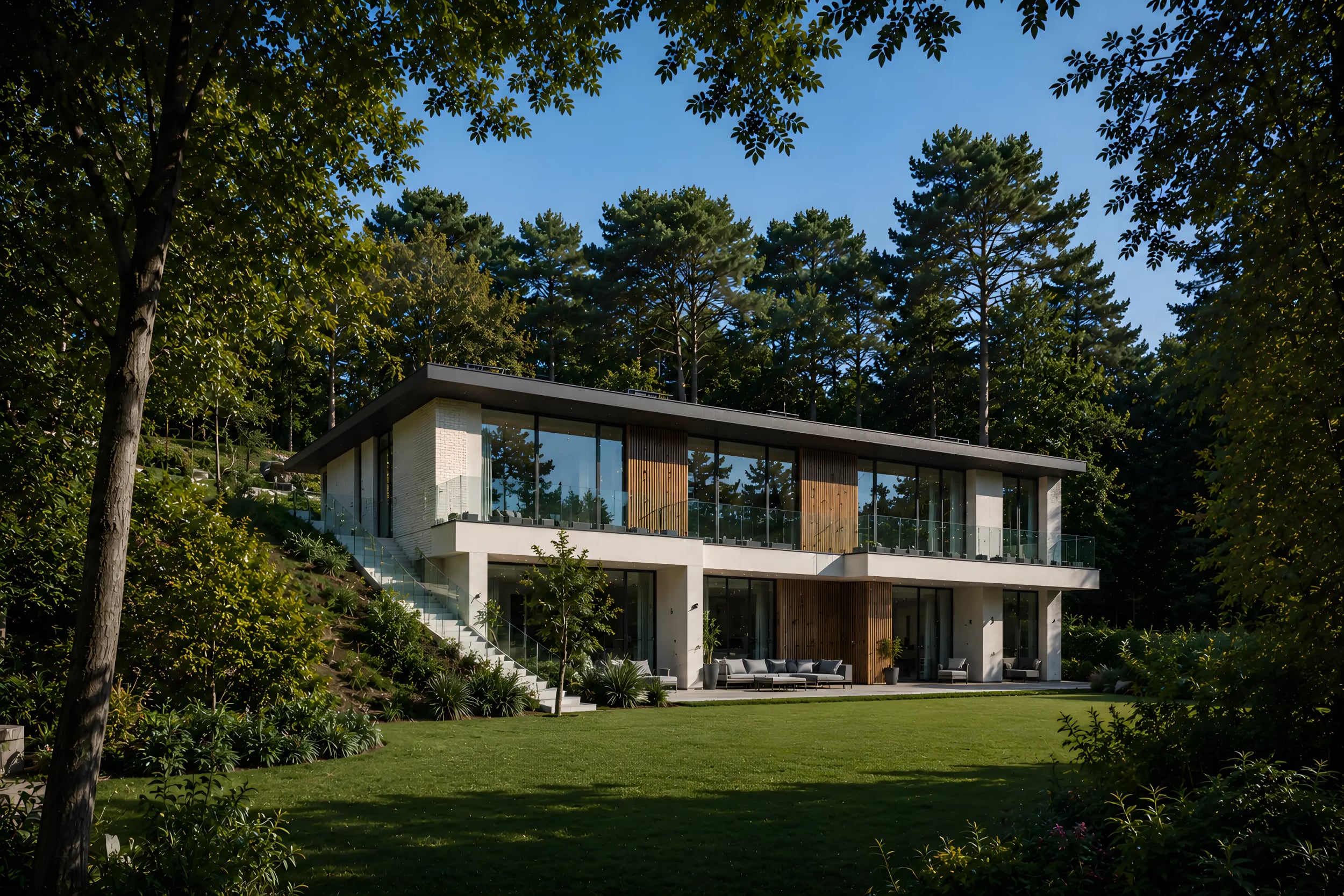
Natural light plays a fundamental role in how a home is experienced throughout the day. It influences atmosphere, comfort, orientation, and the way spaces feel across different seasons. Rather than treating light as something considered later in the process, we approach it as a core part of the architectural response. It shapes layouts, openings, materials, and the relationship between rooms.
Morning light can bring warmth and energy into kitchens, bedrooms, and living spaces. Softer evening light can create a calmer rhythm, helping spaces feel more settled and reflective.
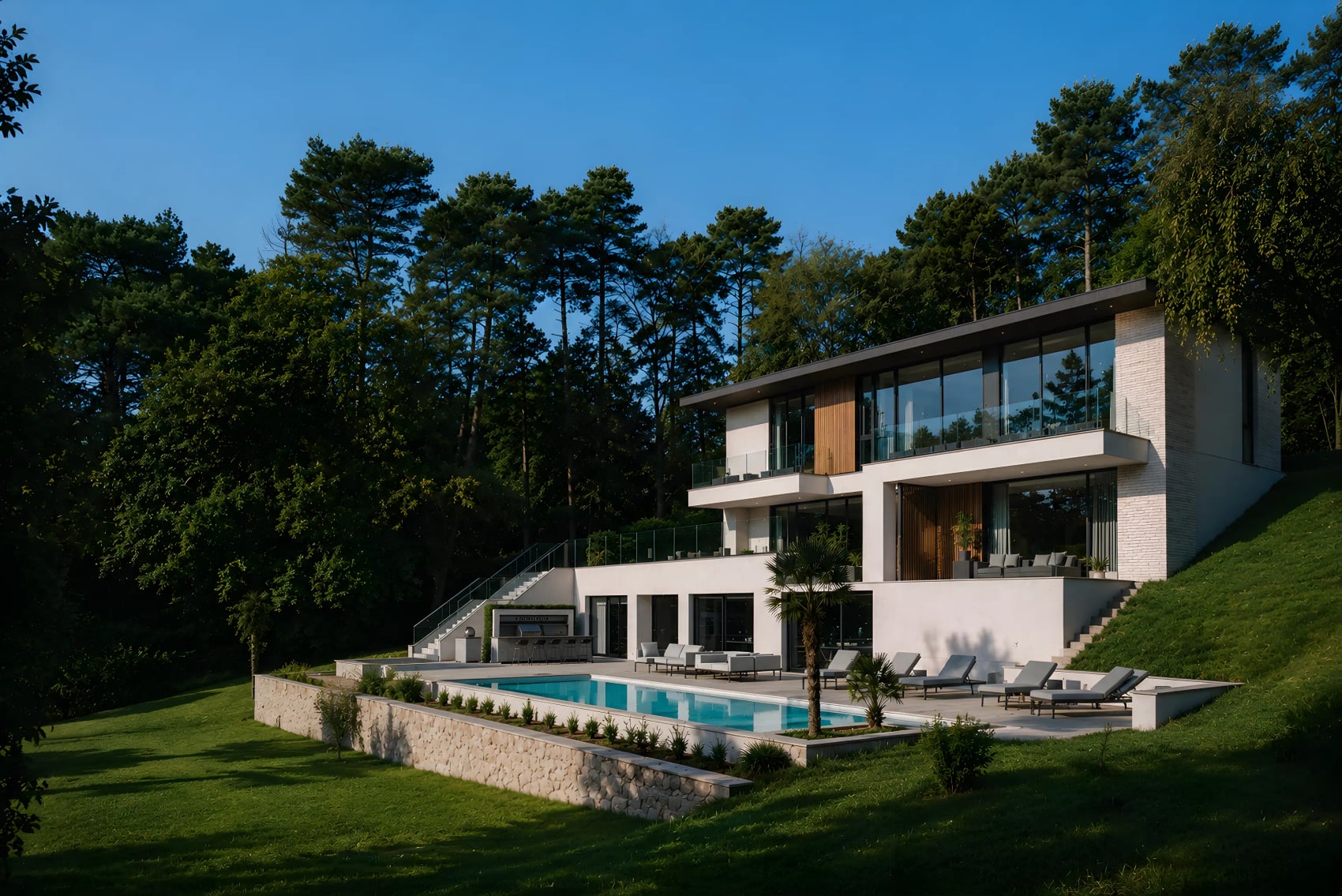
The movement of the sun also changes how a home is used over time. Shadows shift, surfaces respond differently, and views become more or less prominent depending on the season.
A considered relationship between architecture and orientation allows interiors to feel more connected to their surroundings. It helps a home feel responsive rather than fixed.
Material selection plays an important role in this process. Timber, stone, plaster, and textured finishes all interact with light in different ways, creating subtle changes in atmosphere throughout the day.
We often think about how light will move across surfaces, how it will frame certain views, and how it will support the daily routines of the people living there.
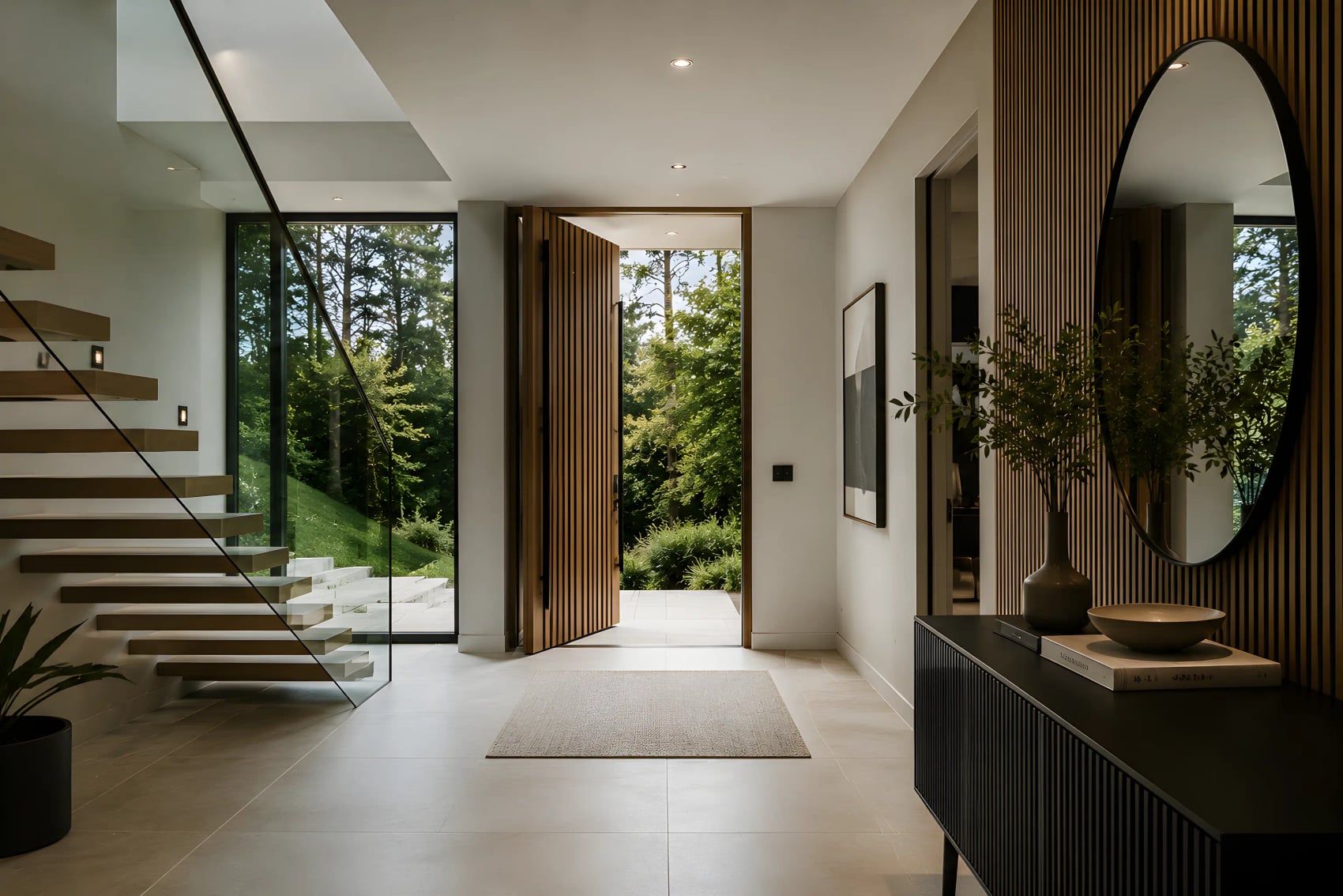
These decisions are rarely about creating dramatic moments alone. More often, they are about building quiet consistency into the experience of the home.
A well-lit space should feel natural, calm, and comfortable without relying on excess or visual complexity.
By designing around light from the beginning, a home can feel more connected to time, place, and the changing conditions that shape everyday living.